Mastering Kakobuy Coupons: Spreadsheet-Driven Strategies for Unbeatable Cross-Border Savings


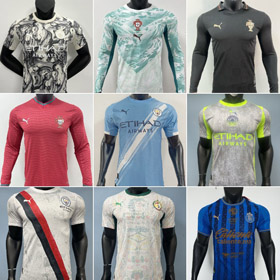










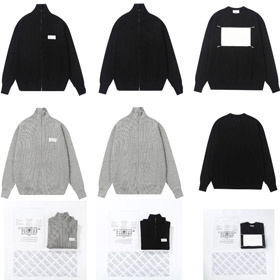



Cross-border shopping on Kakobuy offers access to a global marketplace of fashion, luxury, and lifestyle products—from Jordan 4 Retro sneakers ($34.25) and Dior B30 Series footwear ($45.21) to Rolex watches ($52.05) and Prada casual wear ($25.75-$38.08) (explore the full catalog at https://kakobuy.fun/hot). However, the true key to maximizing value lies in mastering Kakobuy Coupons—a diverse range of discounts with varying rules, 适用范围 (applicable scopes), and savings potential. With coupon policies often complex (e.g., minimum order thresholds, brand exclusions, expiration dates), a Kakobuy Spreadsheet becomes an indispensable tool to organize, analyze, and optimize coupon usage. This guide dives deep into Kakobuy coupon strategies, showing how to use a spreadsheet to decode coupon complexities, compare savings power, and unlock the most cost-effective shopping experiences on the platform.
The Landscape of Kakobuy Coupons: Types, Rules & Challenges
Kakobuy offers a multi-tiered coupon system designed to cater to different shopping scenarios—from casual purchases to bulk daigou orders. Understanding the nuances of each coupon type is the first step to savings, but their varying rules can create confusion without proper organization:
1. Common Kakobuy Coupon Types & Their Rules
Percentage-Off Coupons: The most versatile option, offering 10-25% off eligible items (e.g., 15% off sitewide, 20% off luxury brands). Rules often include minimum order values (e.g., 20% off $100+) or brand restrictions (e.g., excludes electronics). Ideal for high-priced items like Balenciaga Triples ($82.19) or Louis Vuitton bags ($47.95), where percentage savings translate to significant dollar amounts.
Fixed-Amount Coupons: Provide a set dollar discount (e.g., $10 off $50+, $30 off $200+). These work best for mid-range purchases or bulk orders—for example, combining a $30 off $200+ coupon with multiple items like AMIRI jeans ($20.96) + Trapstar T-shirt ($13.56) + Prada shorts ($25.75) to hit the threshold.
Free Shipping Coupons: Eliminate cross-border shipping costs (typically $10-$25), a major added expense for international shoppers. Most have minimum order values (e.g., free shipping on $150+) and may be restricted to specific regions (e.g., EU/US only). Perfect for lighter items like Dior perfume ($14.79) or Diamond Bracelets ($12.33), where shipping costs can outweigh product price gains.
Brand-Exclusive Coupons: Rare but high-value, offering discounts on specific brands (e.g., 25% off Dior, 15% off Gucci). These often have strict expiration dates and limited stock applicability—for example, a Dior-exclusive coupon may only work on Dior B22-B23 sneakers ($45.21) or Dior Perfume ($14.79).
Flash Sale Coupons: Short-term (24-48 hour) discounts with steep savings (e.g., 30% off select items). These are time-sensitive and often tied to seasonal events (e.g., Black Friday, Chinese New Year), requiring quick decision-making.
2. Key Coupon Challenges to Overcome
Complex Eligibility Rules: Coupons may exclude certain categories (e.g., electronics), brands, or sale items—making it hard to know if your target product qualifies.
Threshold Confusion: Minimum order values can be based on pre-discount or post-discount totals, leading to miscalculations and missed savings.
Expiration Overload: Managing multiple coupons with different expiry dates increases the risk of letting high-value discounts go unused.
Stacking Restrictions: Some coupons cannot be combined (e.g., percentage-off + fixed-amount), forcing shoppers to choose the best single option without clear comparison.
A Kakobuy Spreadsheet addresses these challenges by centralizing coupon data, standardizing rules, and enabling side-by-side comparison—turning chaos into clarity.
Step 1: Build a Kakobuy Coupon Spreadsheet – The Ultimate Analysis Tool
A customized Kakobuy Spreadsheet (optimized for Google Sheets, Microsoft Excel, or cloud-based tools) is designed to decode coupon complexities and highlight the best savings opportunities. Unlike generic note-taking, this spreadsheet captures every critical coupon detail, aligns it with Kakobuy’s product catalog, and calculates net savings—ensuring you never waste time on ineligible coupons or suboptimal discounts. Below is the community-vetted spreadsheet template for coupon analysis, with real examples from https://kakobuy.fun/hot:
表格
| Column Header | Description | Example Entries (Kakobuy Coupons & Products) |
|---|---|---|
| Coupon Details | Coupon type, code, and source (e.g., app, Telegram, email) | 20% off Luxury (Code: KAKOLUX20); Free Shipping (Code: KAKOFREE); Source: Kakobuy App |
| Applicable Scope | Eligible brands/categories, excluded items | Luxury brands (Dior, LV, Gucci); Excludes electronics; All categories (min $150) |
| Minimum Order Threshold (USD) | Pre-discount total required to redeem | $100; $150; $50 |
| Discount Value | Percentage or fixed amount | 20%; Free Shipping; $10 |
| Expiration Date | Coupon validity deadline | 2024-08-30; 2024-09-15; 2024-08-20 |
| Target Product(s) | Your desired items (from https://kakobuy.fun/hot) | Louis Vuitton Fashion Bag -0185 ($47.95); Dior B30 Series -0416 ($45.21); AMIRI Jeans -0319 ($20.96) |
| Product Subtotal (USD) | Total cost of target items (pre-coupon) | $47.95; $91.16 (2 items); $125.76 (6 items) |
| Coupon Eligibility Check | Does the product meet coupon rules? (Y/N + reason) | Y (LV is luxury, $47.95 < $100 → N); Y (Dior is luxury, $91.16 < $100 → N); Y (subtotal $125.76 ≥ $100) |
| Calculated Savings (USD) | Actual discount (including shipping if applicable) | $0 (ineligible); $0 (missed threshold); $25.15 (20% off $125.76) + $20 (free shipping) = $45.15 |
| Net Cost After Coupon (USD) | Product subtotal – savings | $47.95; $91.16; $80.61 |
| Savings Percentage | (Savings ÷ Product Subtotal) × 100 | 0%; 0%; 35.9% |
| Notes | Additional rules (stacking allowed, regional restrictions) | “Cannot stack with fixed-amount coupons”; “US/EU only”; “Valid for flash sale items” |
Pro Tips for Populating the Coupon Spreadsheet
Curate Your Product Wishlist First: Browse https://kakobuy.fun/hot to add target items to the “Target Product(s)” column. Prioritize items you’ll actually purchase to avoid cluttering the spreadsheet with irrelevant comparisons.
Extract Coupon Rules Precisely: Copy coupon terms (eligibility, thresholds, exclusions) directly from Kakobuy’s app/website to avoid misinterpretation. For example, if a coupon says “excludes electronics,” note this in the “Applicable Scope” column to prevent ineligible redemptions.
Use Formulas for Automatic Calculations: Set up spreadsheet formulas to compute “Calculated Savings” and “Net Cost” (e.g.,
=IF(G4≥D4, H4*C4, 0)for percentage coupons). This eliminates manual math errors and speeds up comparison.Color-Code for Quick Scanning: Use conditional formatting to highlight top savings (e.g., green for savings ≥30%, yellow for 10-29%, red for 0%). This lets you identify the best coupon-product pairings at a glance.
Step 2: Analyze Coupons with the Spreadsheet to Maximize Savings
The spreadsheet’s true value lies in its ability to turn raw coupon data into actionable decisions. By leveraging filtering, sorting, and scenario analysis, you can identify the most cost-effective coupon for every purchase and avoid common pitfalls. Here’s how to use the spreadsheet for targeted analysis:
1. Compare Coupon Eligibility & Savings for Specific Products
For a single target item (e.g., Louis Vuitton Fashion Bag -0185, $47.95), list all applicable coupons in the spreadsheet and filter by “Coupon Eligibility Check = Y.” For example:
A 20% off luxury coupon (min $100) is ineligible (subtotal $47.95 < $100).
A $10 off $50+ coupon is ineligible (subtotal $47.95 < $50).
A free shipping coupon (min $150) is ineligible.
The best option may be to wait and add another item (e.g., LV belt $11.64) to hit the $50 threshold for the $10 off coupon, reducing the total to $49.59 ($47.95 + $11.64 – $10) + free shipping if the new subtotal hits $150.
The spreadsheet lets you model this scenario by adjusting the “Product Subtotal” column, showing the impact of adding items to qualify for better coupons.
2. Optimize Bulk Orders with Threshold-Based Coupons
For bulk purchases (e.g., daigou for multiple clients), use the spreadsheet to calculate the minimum order value needed to unlock the highest savings. For example:
You’re purchasing 5 items: New Balance 9060 ($38.36) + Gucci -0765 ($23.15) + Palm Angels T-shirt ($13.56) + Prada Shorts ($25.75) + Dior Perfume ($14.79) → Pre-coupon subtotal = $115.61.
Available coupons: $10 off $50+ (saves $10), $30 off $200+ (ineligible), 15% off sitewide (saves $17.34), free shipping on $150+ (ineligible).
The spreadsheet shows 15% off is better ($17.34 savings vs. $10). To unlock free shipping ($20 value) + $30 off $200+, add a low-cost item like Denim Tears T-shirt ($9.32) → New subtotal = $124.93 (still short of $200). Add another item (e.g., Nike Air Force $16.44) → Subtotal = $141.37 (still short). Add Chrome Hearts -0887 ($13.56) → Subtotal = $154.93. Now eligible for free shipping + 15% off → Total savings = $23.24 + $20 = $43.24, net cost = $111.69.
The spreadsheet lets you test these “add-on” scenarios to find the optimal balance between additional spending and total savings.
3. Prioritize Coupons by Savings Percentage
Sort the spreadsheet by “Savings Percentage (highest to lowest)” to focus on coupons that deliver the biggest bang for your buck. For example:
A 30% flash sale coupon on Alexander McQueen sneakers ($57.53) saves $17.26 (29.9% savings) → Higher priority than a $10 off $50+ coupon (17.4% savings on the same item).
A brand-exclusive 25% off Dior coupon on Dior B30 Series ($45.21) saves $11.30 (25% savings) → Better than a 20% sitewide coupon ($9.04 savings).
This sorting ensures you use high-savings coupons first, especially those with imminent expiration dates.
4. Avoid Stacking Mistakes
Use the “Notes” column to track stacking rules (e.g., “Cannot stack with other percentage coupons”). For example:
If you have a 20% off luxury coupon + free shipping coupon, check if stacking is allowed. If yes, the spreadsheet calculates combined savings (e.g., $47.95 LV bag → 20% off = $38.36 + free shipping = total savings $29.59). If not, choose the coupon with higher individual savings (free shipping if shipping cost is $20, 20% off if savings are $9.59).
Step 3: Advanced Coupon Strategies to Supercharge Savings
Beyond basic comparison, the spreadsheet enables advanced tactics to unlock even more value from Kakobuy coupons:
1. Time Purchases Around Coupon Expiry & Sales
Add a “Coupon Expiry Alert” column to the spreadsheet (using conditional formatting to highlight coupons expiring in <7 days). Align these with Kakobuy’s seasonal sales (e.g., Black Friday, end-of-season clearance) to stack coupon savings with sale prices. For example:
A Jordan 4 Retro ($34.25) goes on sale for 10% off ($30.83) → Apply a 15% off sitewide coupon (expiring in 3 days) → Net cost = $26.21 (total savings 23.5%).
2. Use the Spreadsheet to Track Regional Coupon Eligibility
If you’re shopping for international clients, add a “Applicable Region” column to filter coupons by destination (e.g., EU, US, Asia). For example:
A free shipping coupon for EU only works for clients in France but not Australia. The spreadsheet lets you assign coupons to specific orders based on region, avoiding invalid redemptions.
3. Create a “Coupon Bank” Tab for Future Use
Add a separate “Coupon Bank” tab to store unused coupons with future expiration dates. This prevents you from forgetting about high-value discounts and lets you plan future purchases around them. For example, if you have a 25% off Gucci coupon expiring in 2 months, add Gucci -0765 ($23.15) to your wishlist and set a reminder to purchase before the coupon expires.
4. Analyze Historical Coupon Performance
Add a “Historical Use” column to track past coupon redemptions and their actual savings. This helps you identify which coupon types work best for your shopping habits—for example, if fixed-amount coupons consistently deliver higher savings for your bulk orders, prioritize collecting those over percentage-off coupons.
Step 4: Maintaining the Coupon Spreadsheet for Long-Term Savings
To keep the spreadsheet a valuable tool, follow these maintenance best practices:
Update Weekly: Dedicate 10 minutes each week to add new coupons (from Kakobuy’s app, email, or community channels) and remove expired ones.
Archive Expired Coupons: Move expired coupons to an “Archive” tab to keep the active tab clutter-free. This archive can be used to analyze past coupon trends (e.g., “Kakobuy releases 20% off luxury coupons every quarter”).
Sync with Wishlist: Link the spreadsheet to your Kakobuy wishlist (via manual updates or copy-pasting) to automatically check coupon eligibility for new wishlist items.
Share with Daigou Communities: If you’re a professional daigou, share a view-only version of the spreadsheet in Kakobuy forums. Other shoppers may share new coupons or alert you to stacking opportunities you missed.
Final Thoughts: Spreadsheet + Coupons = Kakobuy Shopping Mastery
Kakobuy’s coupon system offers immense savings potential for cross-border shoppers—but only if you can navigate its complexity. A customized Kakobuy Spreadsheet turns confusing rules, thresholds, and expiration dates into a clear, actionable roadmap for savings. By centralizing coupon data, comparing eligibility and savings, and testing scenarios, you can ensure every purchase on Kakobuy is as cost-effective as possible—whether you’re buying a single luxury item or bulk daigou orders.
Start by exploring Kakobuy’s product range at https://kakobuy.fun/hot, building your coupon spreadsheet with the template outlined in this guide, and adding your first set of coupons. Over time, the spreadsheet will become a personalized tool that adapts to your shopping habits, helping you unlock unbeatable savings and turn cross-border shopping into a strategic, budget-friendly experience.
With the right spreadsheet strategy, Kakobuy coupons aren’t just discounts—they’re a way to shop smarter, save bigger, and get more value from every dollar spent on the platform. Happy coupon hunting, and may your spreadsheet always lead you to the best deals!